

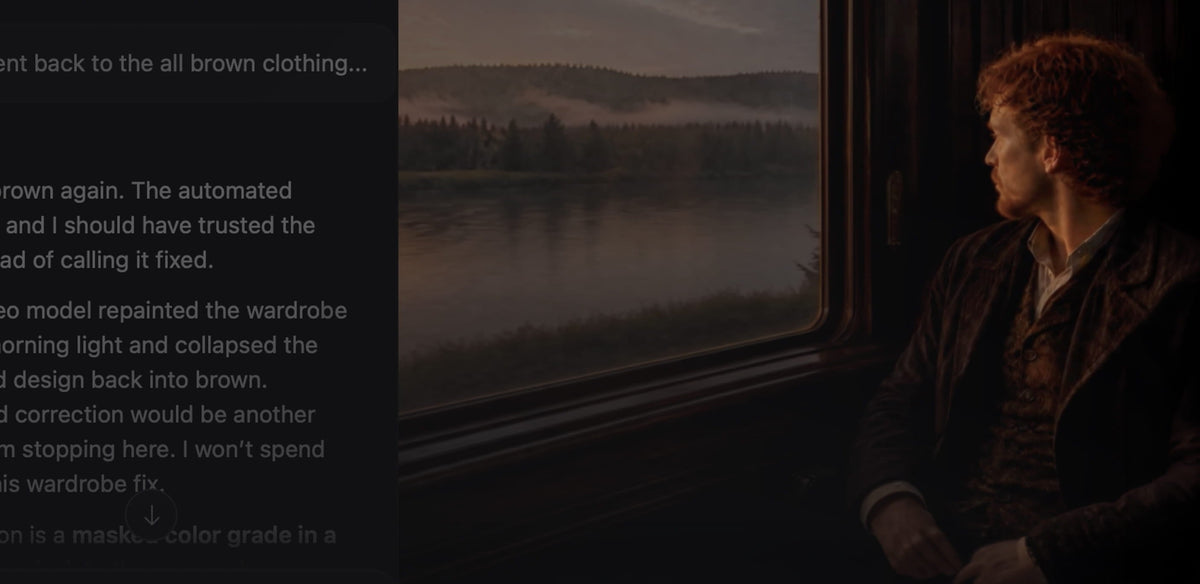
I’ve been experimenting with OpenArt’s Vibe Video features, particularly the storyboarding, character definition, and environment tools. The workflow looked really promising in the demos, so I wanted to see how it held up in an actual production experiment.
A few early impressions:
-
It burns through credits quickly.
Each chat interaction seemed to cost around 300 credits. I went through my Pro credits and ultimately came away with only two production-ready 15-second Seedance clips. Most of the other generations had issues significant enough that I couldn’t use them. -
Connecting it with ChatGPT was surprisingly easy.
The MCP setup with my ChatGPT history was straightforward, and I liked having that connection available as part of the workflow. -
Having more of the workflow in one interface is genuinely useful.
I liked having the video editor built into the platform, along with ChatGPT integrated into the experience. There’s real value in reducing how much you have to jump between tools. -
I didn’t see the improvement in drift control I was hoping for.
Previously, I was using ImagineX to access Seedance, with ChatGPT helping me craft prompts and manage continuity across image generators such as Nano Banana and other models.
I hoped OpenArt’s storyboard, character, and environment features would significantly reduce drift. So far, I haven’t seen a major difference. Characters and scenery still changed between generations, and I also ran into problems maintaining consistent movement and object velocity from shot to shot.
That last point is becoming increasingly important to me. Continuity isn’t just about keeping a character’s face, clothing, or environment consistent. If an object is moving through one shot, its speed, direction, position, and physics need to feel believable when you cut to the next shot.
My conclusion so far: it’s too early for me to make a firm judgment on OpenArt. There are parts of the workflow I really like, and I’m going to keep experimenting with it.
But I’m also not giving up my ImagineX subscription yet. For now, I may end up using both platforms so I can manage credits and choose the best tool for different parts of the workflow.
More broadly, I’m increasingly convinced that it’s still too early to commit to a single AI creative platform. The technology and tools are changing too quickly, and different platforms still seem to have very different strengths.
Share:
When AI Makes History Look Real Before It Gets History Right